Go back
Blog
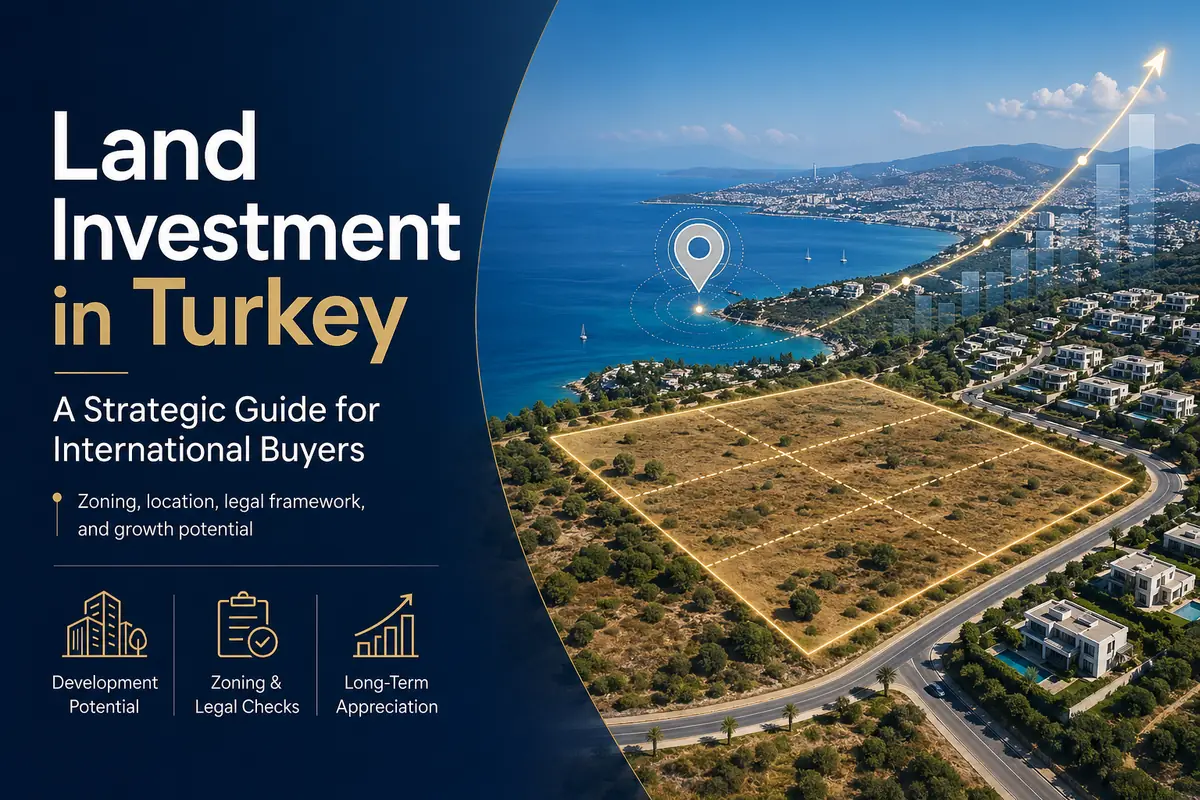
Land Investment in Turkey: A Strategic Guide for International Buyers
6 min readBy Sun and Sky Real Estate editorial team
Land ownership represents one of the most versatile entry points into Turkish real estate. Unlike completed properties, land offers investors the freedom to develop, hold, or sell based on market timing and personal goals. For international buyers, understanding the opportunities and regulations around land purchases is essential for building a successful long-term portfolio.
Turkey's geographic position at the crossroads of Europe, Asia, and the Middle East creates natural demand for land across multiple sectors. Urban expansion, tourism development, and infrastructure projects continue to drive land values upward in both established and emerging locations.
Land investment in Turkey offers several strategic advantages:
Tourism corridors along the Mediterranean and Aegean coastlines generate particular interest. Coastal plots near Antalya, Muğla, and İzmir attract investors targeting holiday home developments, boutique hotels, and resort projects.
Turkish land classification determines what can legally be built and directly impacts investment value. Before purchasing, investors must verify zoning status through municipal records.
Coastal regions contain specialized tourism zones designated for resort developments, holiday villages, and hospitality facilities. Beachfront tourism land attracts investors focused on the holiday rental market and hotel operations.
Farming-designated plots support agricultural activities including crop production, orchards, greenhouses, and livestock operations. Agricultural land often sells at lower prices per hectare but carries strict building restrictions. Small auxiliary structures may be permitted, but residential construction generally requires rezoning approval.
Plots designated for housing development appear primarily in suburban expansion zones and growing coastal towns. This category supports villas, apartment complexes, and planned residential communities. Residential land attracts both individual buyers seeking custom home construction and developers pursuing multi-unit projects.
Business-designated plots sit within urban centers or high-traffic commercial corridors. Permitted uses include hotels, office buildings, retail centers, and tourism facilities. Commercial land typically commands higher prices but offers stronger rental potential once developed.
Turkey permits foreign nationals to purchase land under regulated conditions. Understanding these requirements prevents legal complications and ensures smooth transactions.
Foreign buyers cannot acquire land in military zones, security areas, or strategically protected regions. Individual foreign ownership caps exist at 30 hectares maximum per person. District-level restrictions may apply where foreign ownership already approaches the 10% threshold.
Undeveloped land purchased for construction purposes may require investors to submit development plans within specified timeframes. Municipal authorities enforce these requirements to prevent speculative holding without productive use.
Legal ownership transfers exclusively through the Turkish Land Registry Office (Tapu Müdürlüğü). Private contracts, notary agreements, or informal arrangements do not establish legal title until official registration completes. The title deed (Tapu) serves as the sole proof of ownership.
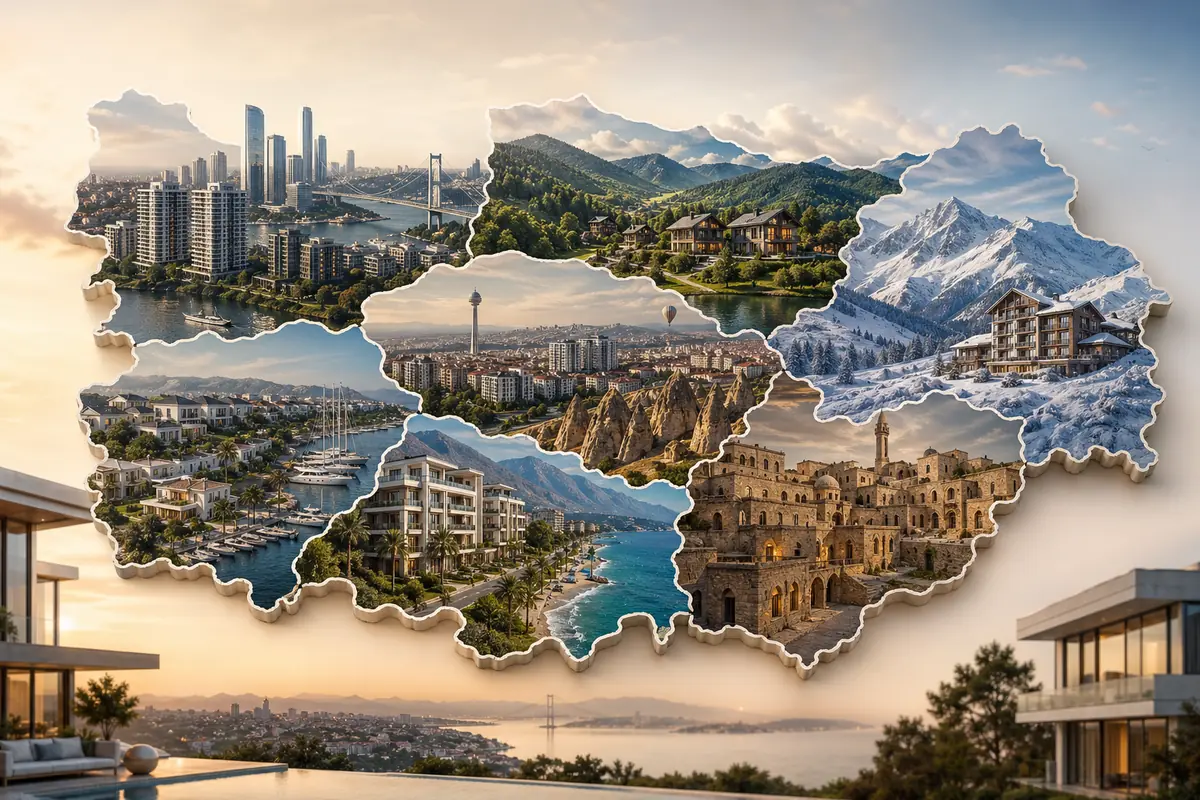
Different regions offer distinct investment profiles depending on development stage, tourism strength, and infrastructure maturity.
İzmir's status as Turkey's third-largest city supports residential and commercial land demand. Premium coastal destinations including Bodrum and Fethiye draw investors targeting luxury villa projects and boutique tourism developments.
Turkey's largest city generates consistent land demand driven by urban regeneration, metro expansion, and population growth. Developing districts in western and northern Istanbul present opportunities for residential development as the city expands outward. Suburban land values have shown steady appreciation as transport links improve accessibility.
Antalya ranks among Turkey's strongest tourism markets with year-round international visitor demand. Expanding residential districts including Konyaaltı, Kepez, and Döşemealtı offer villa development opportunities. Nearby Alanya attracts investors focused on holiday home construction and tourism facilities.
Trabzon's growing Gulf tourism market drives land interest in the Black Sea region. Bursa's industrial strength generates housing demand. Yalova's proximity to Istanbul appeals to lifestyle investors. Mersin's expanding port infrastructure and affordable pricing create early-stage investment opportunities.
Land purchases involve additional costs beyond the purchase price. Proper budgeting prevents unexpected expenses.
Strategic land investment requires thorough due diligence across multiple dimensions.
Population growth trends, infrastructure projects, and tourism development patterns indicate future demand. Regions experiencing sustained expansion typically deliver stronger appreciation.
Confirm permitted uses through municipal zoning records. Zoning classification determines development potential and directly affects future value.
Verify clear ownership status. Check for mortgages, legal disputes, inheritance claims, or municipal restrictions before committing.
Working with established real estate professionals and legal advisors ensures proper documentation, regulatory compliance, and safe transaction completion.
Can foreign nationals purchase land in Turkey?
Yes. Foreign individuals from most countries can legally buy land. Restrictions apply only in military zones, security areas, and specific protected regions.
What documents do foreign buyers need?
Foreign purchasers require a Turkish tax number, valid passport, and bank account for transaction processing. Title deed transfer occurs at the Land Registry Office.
Is land investment profitable in Turkey?
Land can deliver strong capital appreciation when purchased in developing regions. Success depends on location selection, zoning verification, and market timing.
What development obligations exist?
Depending on zoning classification, certain land types may require development plan submission within specified periods. Municipal authorities regulate compliance.
Sun and Sky Real Estate provides comprehensive support for land investors across Turkey. Our team assists with location analysis, zoning verification, legal documentation, and secure transaction processing.
Contact our team to discuss land investment opportunities aligned with your portfolio goals.
Contact Sun and Sky Real Estate for personalized guidance.
Get in Touch →