Go back
Blog
Turkey's Regional Real Estate: Investment Opportunities Across Seven Geographic Zones
6 min readBy Sun and Sky Real Estate editorial team
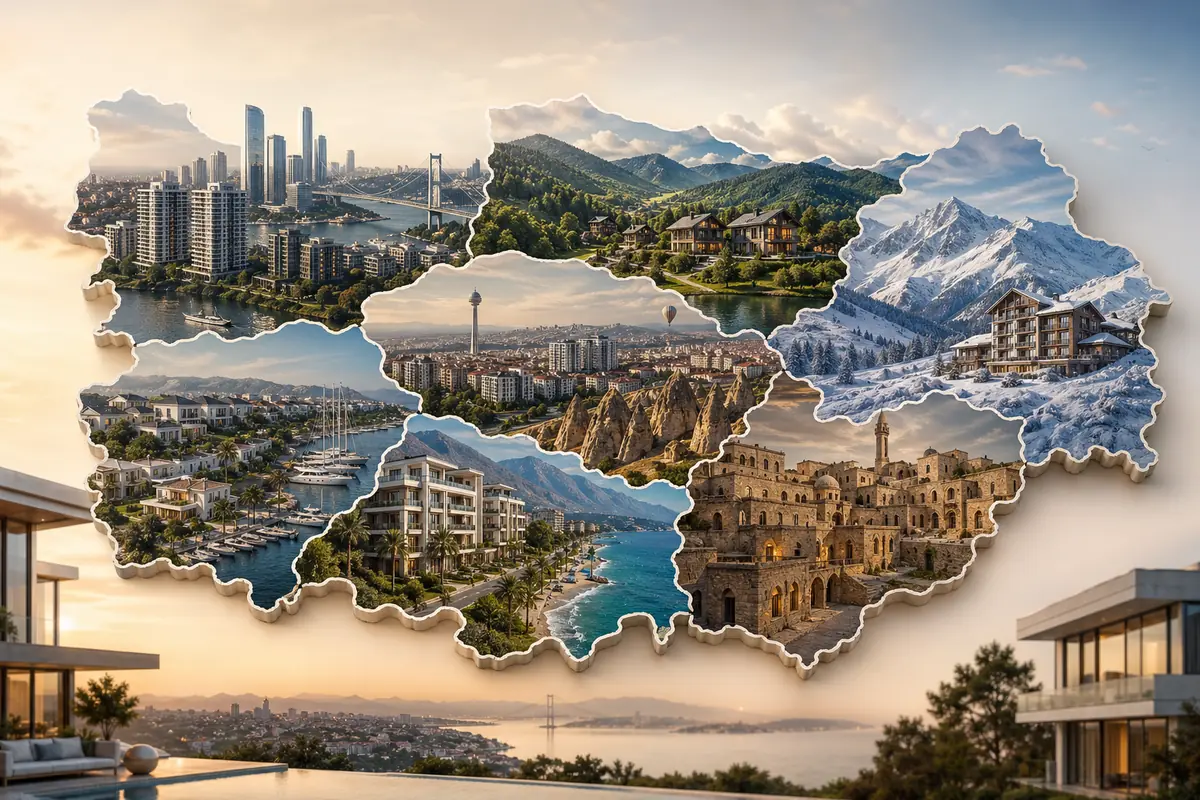
Turkey spans seven distinct geographic regions, each offering unique property market characteristics. Understanding regional differences helps investors match locations to their specific goals whether targeting rental income, capital appreciation, lifestyle properties, or commercial development.
Turkey's northern coast features lush landscapes, cooler climate, and growing Gulf-region interest. This area offers distinctive lifestyle alternatives to Mediterranean tourism corridors.
Trabzon attracts increasing international buyer interest particularly from Gulf countries. Rize gains attention through tea plantation tourism and scenic landscape appeal.
This region's Mesopotamian heritage and culinary reputation drive growing tourism interest. UNESCO recognition and archaeological significance create boutique hospitality opportunities.
Gaziantep's textile industry supports commercial property demand alongside tourism development. Mardin's historic architecture attracts boutique hotel investors.
Turkey's southern coastline ranks among Europe's strongest tourism destinations. Year-round international visitor demand supports both holiday rental markets and permanent residential communities.
Antalya represents Turkey's second-largest foreign investment market. Alanya attracts European and Russian buyers seeking beachfront properties. The region offers strong holiday rental performance with lower entry costs than Istanbul.
The Aegean coast delivers upscale living environments combining yachting culture, historic charm, and sophisticated property developments. This region appeals to lifestyle-focused investors seeking quality over pure yield metrics.
İzmir offers Turkey's third-largest urban market with balanced investment opportunities. Bodrum and Fethiye dominate the luxury segment, attracting high-net-worth buyers and lifestyle investors.
Turkey's largest but least densely populated region offers winter tourism and dramatic landscape experiences. Ski destinations and adventure tourism create specialized investment niches.
Erzurum's Palandöken Ski Resort anchors winter tourism investment. Kars benefits from Eastern Express train route popularity and historic Ani Ruins visitor interest.
The Marmara region anchors Turkey's financial, industrial, and logistical infrastructure. This zone connects Europe and Asia through Istanbul, generating the country's strongest real estate liquidity and international investment activity.
Istanbul properties generate the highest transaction volumes nationally. Urban regeneration projects in developing districts create appreciation opportunities. The region accounts for approximately half of Turkey's industrial production, sustaining consistent housing demand.
Turkey's interior region centers around government institutions, universities, and stable employment sectors. Property markets benefit from consistent domestic demand rather than tourism fluctuations.
Ankara delivers one of Turkey's strongest rental income environments with reduced volatility. Nevşehir draws boutique tourism investment through Cappadocia's unique cave hotel developments.
Investment returns vary significantly across regions depending on market maturity and demand characteristics.
| Region | Main Rental Demand | Liquidity |
|---|---|---|
| Marmara | Year-round urban demand | Strong |
| Mediterranean | Tourism and holiday lets | Strong |
| Aegean | Lifestyle and holiday homes | Medium |
| Central Anatolia | Students and public-sector employees | Medium |
| Black Sea | Seasonal and Gulf tourism | Medium-Low |
| Southeastern | Cultural tourism and trade | Low |
| Eastern | Winter and adventure tourism | Low |
Gross rental yields in Turkey's main rental markets, including Istanbul, are typically 6–10%; tourism areas vary more by season. These are typical figures, not a guarantee of future returns.
Beyond residential markets, regional industrial capacity creates commercial property opportunities.
Turkey's regional development policy provides varying incentives based on zone classification:
Incentives may include VAT exemptions, customs duty reductions, tax discounts, and interest support for qualifying investments.
Several secondary markets show growing momentum:
Yalova: Strategic Istanbul-Bursa gateway appeals to thermal tourism and retirement property buyers.
Sakarya: Sapanca tourism growth and nature retreat reputation attract weekend home and rental investment.
Bursa: Industrial strength plus Istanbul proximity supports housing demand in Nilüfer and Mudanya districts.
Mersin: Affordable coastal pricing, port infrastructure, and growing foreign interest create early-stage opportunities.
Trabzon: Rapidly expanding tourism and Gulf buyer interest drives residential demand and business investment.
Which region offers highest rental returns?
Tourism demand makes the Mediterranean region strong for holiday rentals, but income varies by season. Gross rental yields in Turkey's main rental markets are typically 6–10%, and no yield is guaranteed.
Where do lifestyle investors prefer?
Aegean region attracts lifestyle-focused buyers seeking Bodrum and Fethiye's premium coastal environments with quality amenity infrastructure.
Which region suits risk-conscious investors?
Central Anatolia offers steadier rental demand through Ankara's government and university employment base, with less dependence on tourism.
Do all regions allow foreign ownership?
Most regions permit foreign property ownership. Military zones and security areas carry restrictions regardless of region. District-level caps may apply where foreign ownership approaches limits.
Sun and Sky Real Estate provides regional market analysis and location guidance for property investors across Turkey. Contact our team to discuss investment strategies matching your regional preferences and portfolio objectives.
Contact Sun and Sky Real Estate for personalized guidance.
Get in Touch →