Go back
Blog
Rental Yield and ROI: Measuring Turkish Property Investment Returns
7 min readBy Sun and Sky Real Estate editorial team
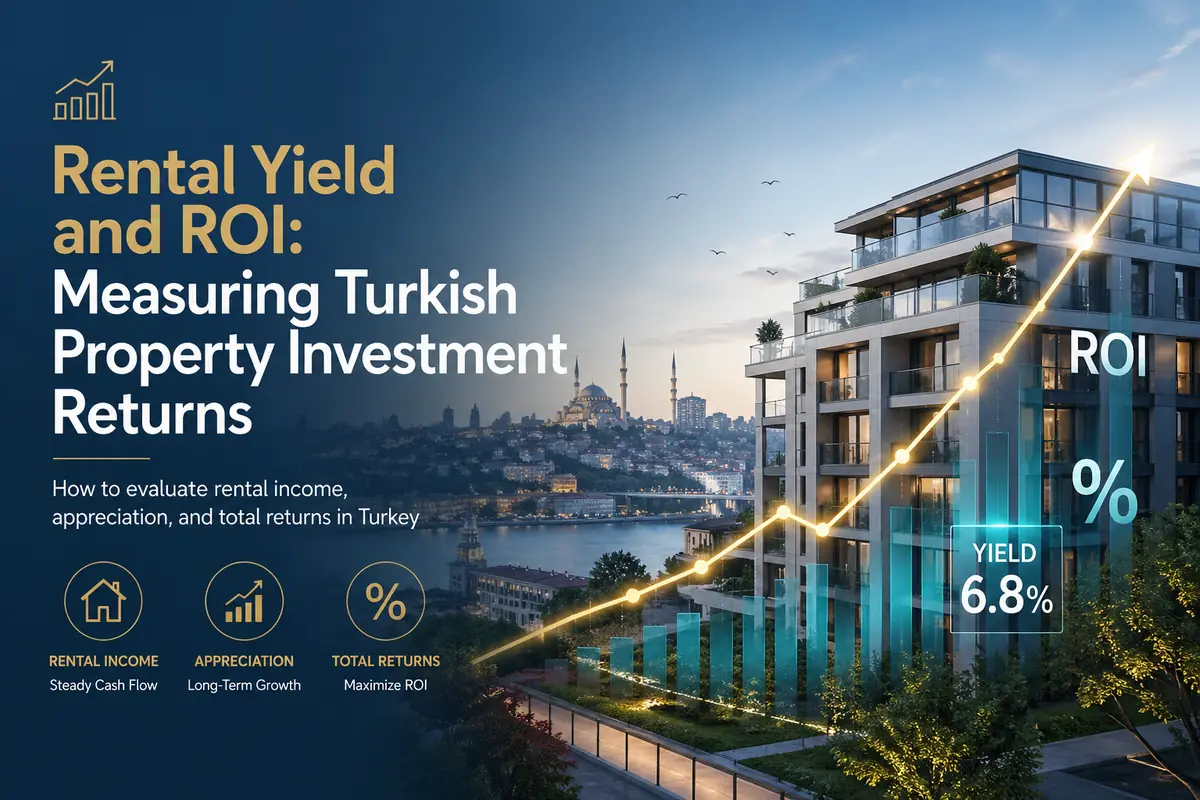
Understanding return metrics enables informed property investment decisions in Turkey. Rental yield measures income performance. Return on investment (ROI) combines income with capital appreciation for total profitability assessment. Both metrics require careful calculation considering Turkish market specifics.
Rental yield expresses annual rental income as percentage of property purchase price. This metric provides straightforward profitability comparison across properties and markets.
Gross yield measures income before expenses:
Formula: Annual Rental Income ÷ Property Price × 100
Example calculation for a €200,000 property generating €14,000 annual rent:
Gross Yield = (14,000 ÷ 200,000) × 100 = 7%
Net yield subtracts operating expenses before percentage calculation:
Formula: (Annual Income - Annual Expenses) ÷ Property Price × 100
Gross rental yields in Istanbul are typically 6–10%, depending on location, property type, and rental strategy. Net yields are lower once costs are deducted.
Multiple variables affect rental profitability in Turkey's property markets.
Vacancy periods reduce actual returns significantly. High-demand locations minimize vacancy risk. Professional management services improve occupancy through marketing and tenant relations.
Inflation dynamics affect both rental rates and property values. Rising property values may offset rental rate limitations. Currency movements influence foreign investor returns measured in home currency.
Strong rental markets concentrate in high-demand locations:
Proximity to transport, amenities, employment centers, and tourist attractions directly impacts occupancy rates and achievable rents.
Return on investment combines rental income with capital appreciation for comprehensive profitability measurement.
ROI (%) = (Annual Net Profit + Capital Appreciation) ÷ Total Investment × 100
ROI = (€8,000 + €12,000) ÷ €180,000 × 100 = 11.1%
This illustrative example shows how price growth, if it happens, adds to rental income. It is not a forecast: property values can also stay flat or fall.
Investors choose between short-term tourism rentals and long-term residential leasing based on goals and management capacity.
Residential leases provide stable income with minimal management requirements.
Performance characteristics:
Long-term rentals work well for urban apartments targeting professional tenants, families, and expatriate residents.
Tourism-focused short-term rentals deliver higher potential yields but require active management.
Performance characteristics:
Short-term rentals suit tourism destinations including Antalya, Bodrum, and Istanbul's historic districts. Income is higher in peak season and lower off-season, and a licence is required.
| Strategy | Yield Range | Risk | Management | Income Stability |
|---|---|---|---|---|
| Long-term | Typically 6–10% gross | Low | Low | Stable |
| Short-term | Varies by season | Medium | High | Seasonal |
| Off-plan | Variable | Medium | Low | Depends on exit |
Gross rental income appears attractive, but multiple expenses reduce actual profitability.
Commercial lease withholding tax affects investor cash flow depending on contract specification. Net rent contracts protect expected income; gross rent contracts may reduce actual receipts.
Turkish Lira depreciation may reduce USD/EUR-denominated returns. Tourism zones and premium segments allow currency-aligned pricing, mitigating exchange risk through foreign-currency rental rates.
Annual rent increases follow CPI-based calculations rather than landlord discretion. The 12-month CPI average determines permitted increases. This limitation affects long-term cash flow projections.
Rental income taxation applies to property earnings. Turkish tax law requires rental income declaration. Commercial leases involve withholding tax paid by tenants—contract clarity (net vs gross rent) prevents cash flow surprises.
Beyond rental income, property value growth significantly enhances total returns.
Long-term owners may benefit from both rental income and price growth, but price growth is not guaranteed.
Successful investment requires ongoing return tracking:
Regular monitoring helps you adjust your strategy over time.
What rental yields do Turkish properties generate?
Gross rental yields in Istanbul are typically 6–10%. Short-term tourism rentals vary more by season and require a licence. Yields are typical figures, not a guarantee.
How does ROI calculation work?
ROI combines annual net rental income plus capital appreciation divided by total investment. Example: €8,000 income + €12,000 appreciation ÷ €180,000 investment = 11.1% ROI.
Which strategy maximizes returns?
Short-term tourism rentals can earn more in peak season but need active management and a licence. Long-term rentals provide steadier income with less management. The right choice depends on the property and your goals.
What hidden costs reduce net returns?
Taxes, maintenance, management fees, site contributions, vacancy periods, and potential currency depreciation affect actual profitability beyond gross rent.
Does Turkey offer good investment returns compared to Europe?
Turkish yields compare well with many Western European markets: gross rental yields in Istanbul are typically 6–10%. Larger property sizes for the same budget add to Turkey's appeal. Returns are never guaranteed.
Sun and Sky Real Estate provides rental strategy guidance, property selection support, and management service coordination for investors targeting Turkish rental markets. Contact our advisors to discuss an approach that matches your goals.
Contact Sun and Sky Real Estate for personalized guidance.
Get in Touch →