Go back
Blog
Turkish Property Investment in 2026: Balancing Risk and Opportunity
8 min readBy Sun and Sky Real Estate editorial team
Turkey's real estate market presents a complex investment landscape in 2026. Strong fundamentals including rental demand, infrastructure development, and tourism recovery create compelling opportunities. Simultaneously, evolving tax regulations, currency dynamics, and regional risk factors require careful strategic planning. Investors who understand both sides of this equation position themselves for sustainable returns.
Turkey's housing market faces significant supply constraints. Construction costs increased substantially from 2021 through 2025, limiting new project development. Current housing supply meets only approximately half of annual demand. This imbalance has supported prices, although future price growth is never guaranteed.
Rental demand remains robust across major cities and tourism destinations. High property prices combined with elevated mortgage rates prevent many domestic buyers from purchasing, sustaining tenant demand. International renters including digital nomads, retirees, and medical tourists expand the rental pool beyond traditional segments.
Tourism has rebounded strongly, boosting short-term rental opportunities. New legislation requiring commercial licenses and neighbor consent for short-term rentals professionalized the market. Licensed properties in Antalya, Bodrum, and Istanbul now serve regulated tourism demand, although short-term rental income varies strongly by season.
Turkey's citizenship-by-investment program offers strategic value beyond real estate returns. Minimum property investment of $400,000 USD qualifies foreign buyers for Turkish citizenship including spouse and children under 18. Family members receive residency cards providing immediate healthcare and education access. Properties must be held for three years.
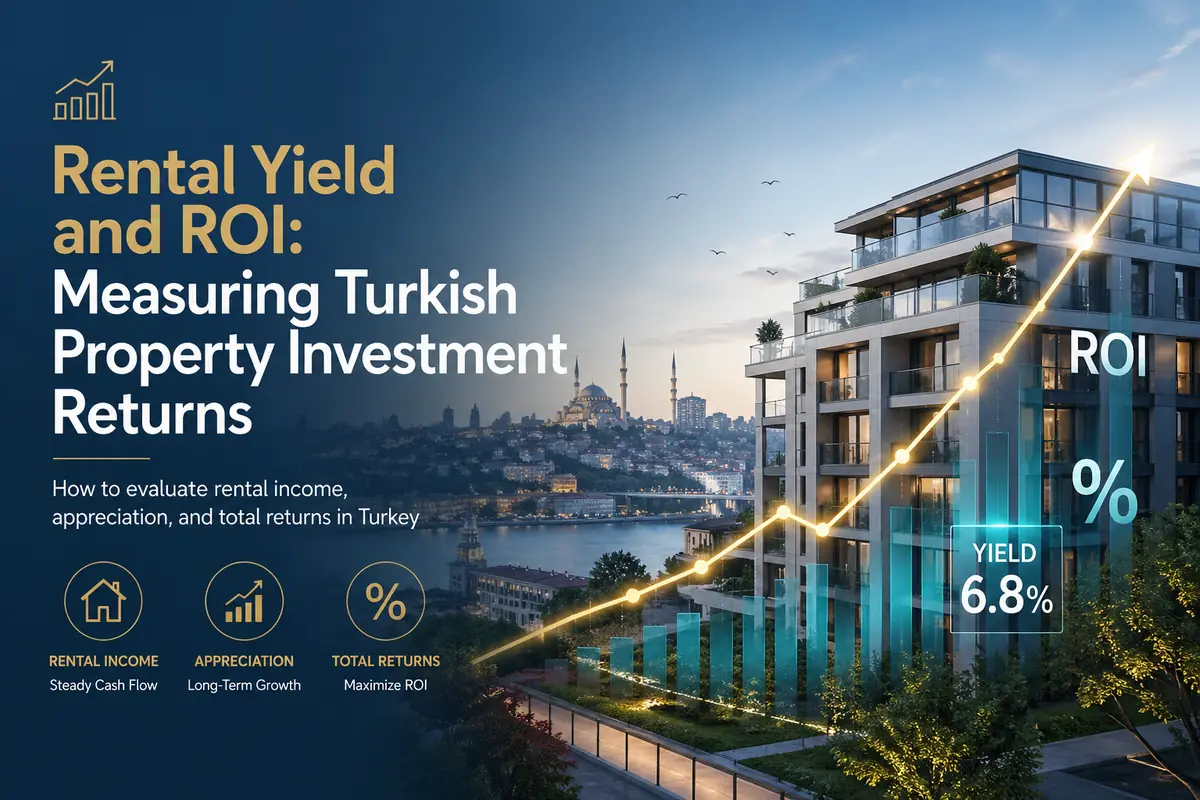
Turkish rental yields compare well with many Western European markets. Gross rental yields in Istanbul are typically 6–10%, depending on the district, the unit and how it is rented; past or typical yields are not a guarantee of future returns. The "square meter advantage" means equivalent budgets purchase larger, modern Turkish units with superior amenities.
Lira movements can affect prices for buyers paying in USD or EUR, in both directions. Careful currency planning helps you manage exchange risk.
GDP stabilization near 3.9% and moderating inflation create conditions for real property value growth. Housing supply constraints may support prices, but values can also stagnate or fall in real terms. Investors targeting developing urban districts benefit from infrastructure expansion and population growth.
Individual foreigners cannot own more than 30 hectares of land. District-level ownership caps at 10% of private property may restrict resale markets where limits approach. Military and security zones prohibit foreign ownership entirely. "Closed Neighborhoods" in certain Istanbul districts restrict new residence permits for foreigners, though property purchase remains permitted.
Mortgage rates declining toward 25% expand domestic buyer access. Previous peaks at 46% suppressed mortgage transactions to just 14% of total sales. Lower rates release pent-up demand, increasing market competition and potentially affecting resale liquidity.
Turkish Lira volatility creates both opportunity and risk for foreign investors. Currency depreciation benefits initial purchases but may offset property gains when measuring returns in foreign currency. 2026 shows improved Lira stability compared to previous years, reducing medium-term currency risk.
Turkey updated its property tax system with a four-year valuation cycle. Registered property values (rayiç bedel) increased substantially in major cities, sometimes by 300–500% in standard districts and higher in luxury areas. These changes affect annual property taxes, title deed fees, and inheritance obligations. Rental income reporting through mandatory digital contracts on E-Devlet increases tax accountability for landlords.
Legal ownership transfers only through official Tapu registration at the Land Registry Office. Notary contracts alone do not establish ownership. Investors must verify clear title status before committing.
Properties under construction should carry Kat İrtifakı status, confirming legally defined units approved by municipal authorities. Projects without proper documentation or Iskan (habitation license) face utility connection problems and potential fines.
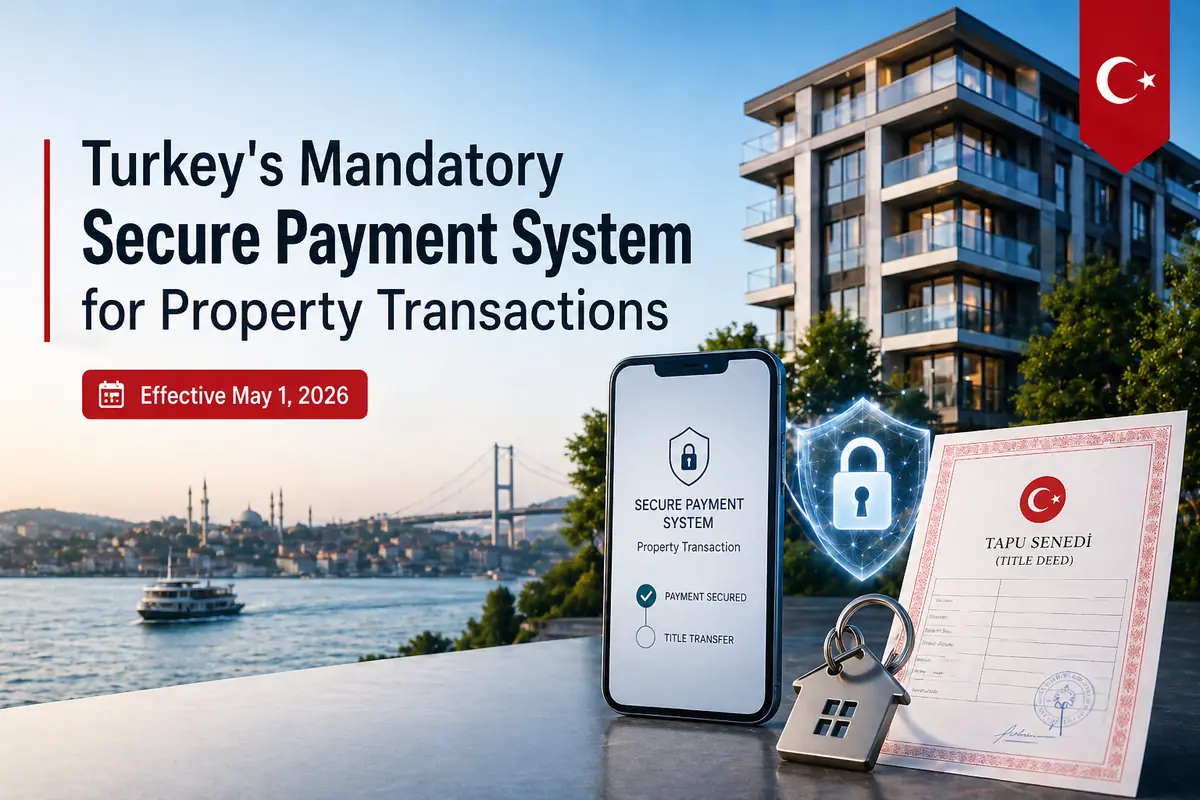
Starting May 2026, all property transactions must use secure cashless payment systems. This reform prevents off-the-books payments and protects buyers from fraud. Takasbank provides government-backed payment security linking fund transfer with title deed transfer in synchronized process.
Metro expansion in Istanbul reduces commute times to financial centers, increasing values in connected districts. Urban regeneration projects reshape neighborhood profiles. Trade corridor reopening to Middle Eastern markets boosts commercial demand in southern cities including Mersin and Gaziantep.
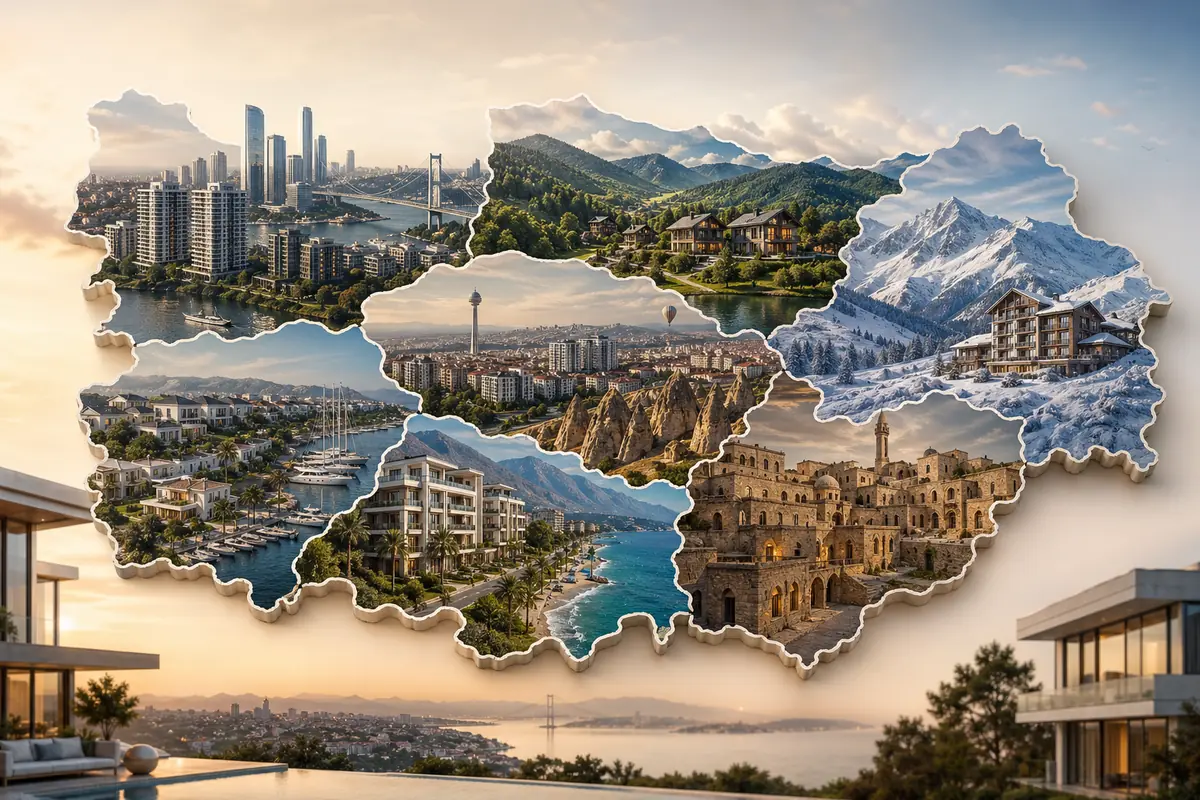
Cultural and economic districts like Kadıköy and Üsküdar maintain strong demand and long-term capital preservation. Antalya delivers year-round rental returns. Bodrum's limited luxury supply sustains high resale values. Ankara offers stable income potential for risk-averse investors.
Earthquake safety affects property valuation across Turkey. Istanbul's Asian side generally offers more stable ground conditions than certain European-side districts. Buildings constructed after 2018 comply with Turkish Earthquake Code standards including seismic isolation and reinforced concrete specifications. Central Anatolia presents lower seismic risk but reduced rental liquidity.
| Region | Seismic Profile | Investment Character |
|---|---|---|
| Istanbul Asian Side | Moderate | Capital preservation focus |
| Antalya | Moderate | Yield-oriented investment |
| Bodrum | Moderate | Luxury segment, limited supply |
| Ankara | Low | Stable income, lower risk |
| Central Anatolia | Very Low | Niche diversification |
Is Turkish real estate investment safe?
Turkey offers legitimate investment opportunities with proper due diligence. Legal reforms improve transaction security. Success requires understanding regulations, verifying documentation, and selecting appropriate locations.
What returns can investors expect?
Gross rental yields in Istanbul are typically 6–10%, depending on the district, the unit and the rental strategy. Short-term rental income varies more by season. Returns, including any price growth, are never guaranteed.
How does citizenship investment work?
Foreign buyers investing $400,000 USD in property qualify for Turkish citizenship. Properties must be held three years. The program includes spouse and children under 18.
What legal protections exist for foreign buyers?
Mandatory secure payment systems protect transaction funds. Title deed registration provides legal ownership proof. Professional advisors assist with documentation verification.
Sun and Sky Real Estate provides comprehensive investment guidance including property verification, legal documentation review, and transaction support. Contact our advisors to discuss investment strategies aligned with your goals and risk tolerance.
Contact Sun and Sky Real Estate for personalized guidance.
Get in Touch →